Article Guides
Match-3 Strategy: Build Combos and Clear Objectives Faster
Use a clearer match-3 strategy: read the objective, create space, plan cascades, combine special pieces and avoid moves that look useful but waste turns.
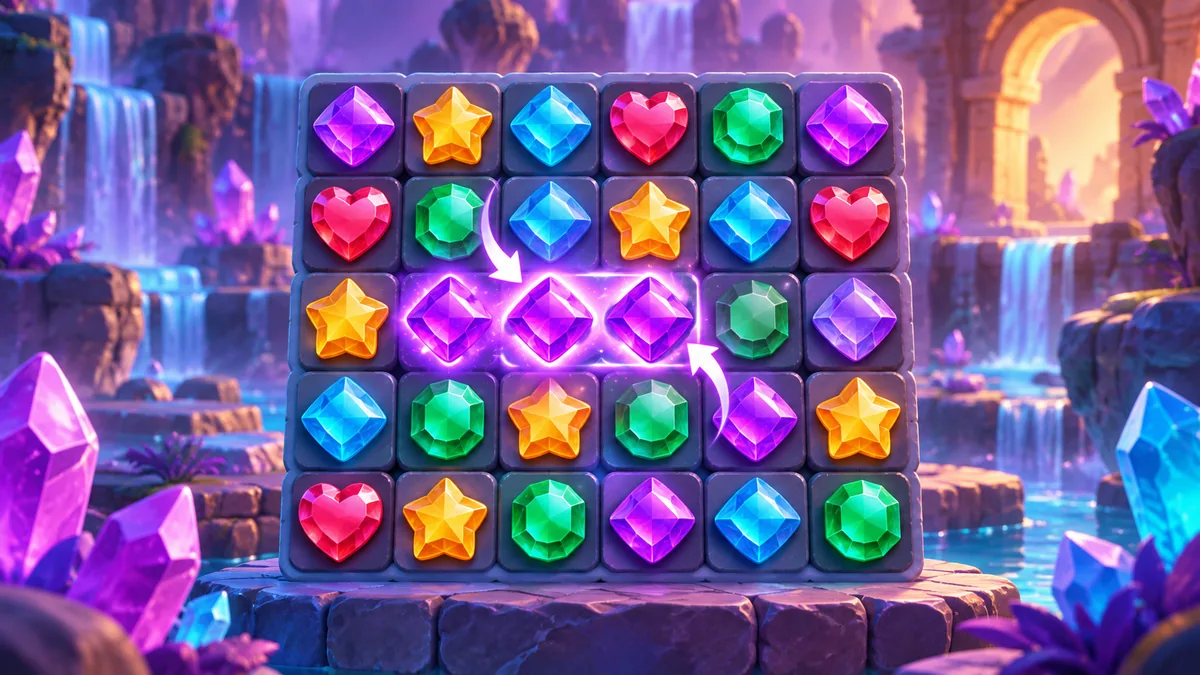
- 2 min read
- 6 sections
- 7 steps
Good match-3 strategy begins before the first swap. The board may be colorful, but the important information is the objective, the turn limit and the spaces that control movement.
A large score does not always solve the level. Strong play connects every move to the objective while preserving options for the following turn.
The practical method
Read the objective first
Identify the exact pieces, blockers or board areas that matter. A spectacular combo is only valuable when it advances the goal.
Work low on open boards
Matches near the bottom move more pieces and can create useful cascades. Check the full board again after it settles.
Create space around blockers
Clear adjacent cells so new pieces can reach restricted areas. Attacking one blocker repeatedly may be less efficient than opening its surroundings.
Plan special pieces
Look one move beyond the immediate match. A four- or five-piece setup can produce a tool that clears rows, columns or nearby obstacles.
Combine specials carefully
Two special pieces can reshape the board, but activate them where their effect reaches the objective.
Protect scarce colors
If the level asks for a specific color, avoid consuming every nearby piece before building a larger match.
Pause after cascades
The board has changed. Reusing the previous plan without rereading the layout can waste a turn.
A four-step practice routine
- Pick one measurable goal for the session.
- Play a short attempt and observe the earliest problem.
- Change one input or decision.
- Compare the result, keep the improvement and repeat.
Common mistakes and better responses
| Problem | Better response |
|---|---|
| Matching the first available set | Scan for objective progress and special-piece setups. |
| Ignoring corners | Plan access to hard-to-reach cells early. |
| Saving specials too long | Use them when they can open the board or secure the goal. |
| Following score alone | Track the objective and remaining moves. |
How to choose your next game
Choose a game that works on your device and offers rounds short enough for deliberate practice. Start with the category page, read the game card, then use the first session to learn controls rather than chase a perfect result.
Explore Match 3 games on BigQ Play. You can also check Hot Games and Editor Picks for more options.
Frequently asked questions
Is there one best opening move?
No. The objective and starting board determine the useful opening.
Are bottom matches always better?
They often create more movement, but a direct objective move can be stronger.
Where can I play similar games?
Browse the Match 3 category on BigQ Play.
Final checklist
Keep the process simple: understand the objective, make one intentional change and use the result as feedback. Consistency produces progress faster than random repetition.
Editorial guide prepared by BigQ Play on September 15, 2026. Game features and controls can vary by title and device.